That’s No Conlang
A Conlang, for the uninitiated, is a artificially constructed language. Lots of fiction has them, from Star Trek’s Klingon to Avatar’s Na’vi to the elephant in the room, Mr. J. R. R. Tolkien’s list of languages.
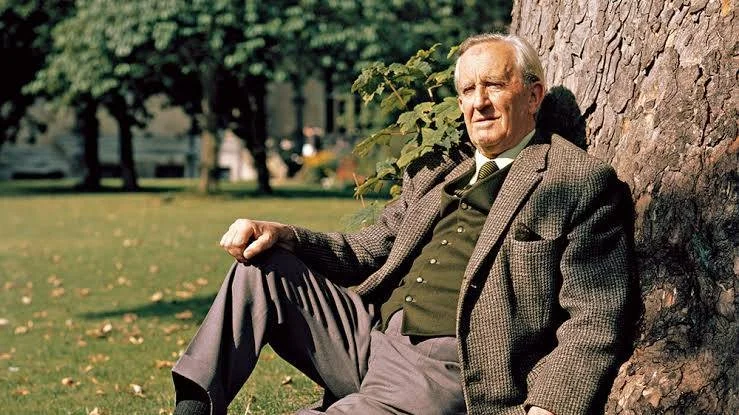
Damnit Tolkien! Why you gotta be setting bars so high?
A language needs proper phonology, grammar, orthography, and vocabulary. In real languages, these develop organically over centuries. Creating a language for the purposes of fiction is an amazing feat of linguistics in fast-forward.
When I set out to write fantasy, I quickly ran into the need for fictional languages. But I am absolutely no Linguist. I’m not even certain I know how to pronounce orthography correctly. My exposure to linguistics is maybe three baby steps ahead of the average American. I’ve read some books on the topic. As a Louisiana native, I began taking French in elementary school so I know enough French to watch the news with my wife and sigh with exasperation in the right places. More recently I’ve learned enough Dutch to get around and handle the grocery shopping. But beyond that?
Yeah, a true conlang is definitely not in my wheelhouse.
I knew I didn’t want to bog the reader down with a ton of made up words, so in most scenes I just denoted that somebody is speaking another language by putting the words in english italics. But I still needed something in there for flavor. What I ended up doing isn’t just random gibberish, though. And I thought some of my readers might find the background interesting.
In The First Whispers of Fate, the main protagonist is Aideen Bormia. A young woman of mixed heritage. Her father was human, her mother an elf. D&D would call her a half-elf, but I dislike the idea that a person can be half of anything. She is born of two bloods—both human and elf. She, like all of us, contains multitudes.
So what does elvish sound like? Well, it sounds like Aideen.
My version of Elvish is based on the sounds of Haitian Creole. Creole languages are what happens when you put people together who don’t share a common language. In the case of Haitian Creole, it is the result of French settlers working alongside both gens de couleur libres (free people of color) and enslaved Africans in Saint-Domingue (Haiti) in the 17th and 18th centuries. In situations where groups without a common language must work together, it starts practically. At first they will boil down their speech to the simplest form and teach each other words. Man. Woman. Child. Food. Water. That. Give. This forms what is called a pidgin language, and it lets two people communicate almost caveman style over the essentials.
But given enough time together, people do what people do. They create a new language from this new shared base. That new language, derived from the ones that came before, is a Creole language.
I’m simplifying. Remember, I’m not a linguist.
I really liked the idea of a new thing being created out of two as a kind of linguistic metaphor for Aideen’s dual identity. And the historical context of Haitian Creole is fitting for the Aideen’s story, as readers will see in Book 2.
So I began taking words and phrases and simply translating them into Haitian Creole. This formed the base, a real blended origin language. But while Haitian Creole is largely an 18th century French vocabulary, the grammar is derived from Volta-Congo languages. So I French to reverse engineer portions of the translations so I could maintain some grammar rules. I call this re-frenchification, which is definitely not a technical term. I also injected some variations, mostly around pronunciation rules.
So the result is, while absolutely not a true conlang, something much closer to one than your standard fantasy language. It certainly reads as language-y on the page. It has a consistent sound and feel. If you want to try to pronounce it, well, all you have to do is pronounce it like an American butchering French. That’s kinda my thing.